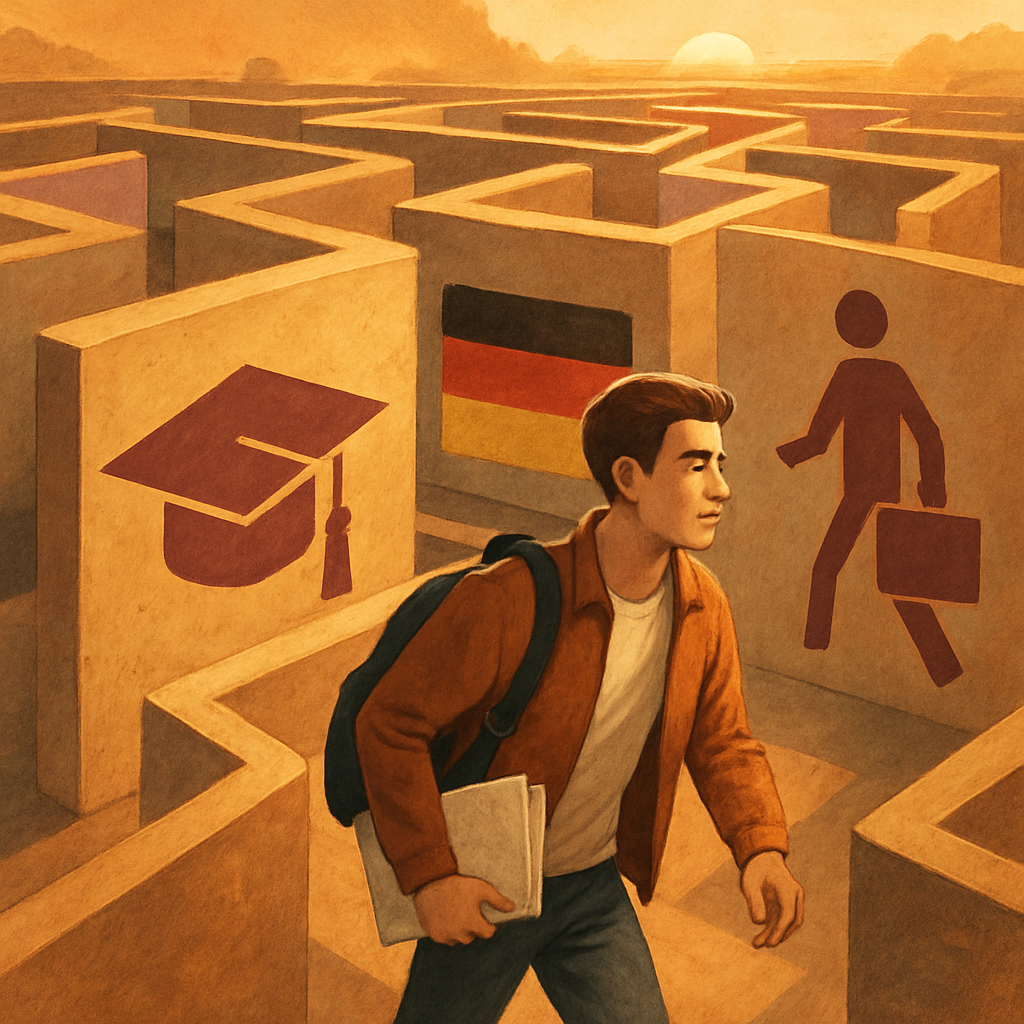
Navigating the German Immigration Maze: From Student to Employee
Beginning the Journey in Germany
Hello, I'm Sahar, a 28-year-old originally from Tehran, Iran. My journey to Germany started in 2018 when I was accepted into a PhD program in Physics at the University of Munich. The excitement was palpable, but it was soon tempered by the bureaucratic hurdles that lay ahead.
The Blocked Account and Initial Hiccups
One of the first challenges was setting up a 'Sperrkonto' (blocked account) to prove financial stability, which was required for my student visa. I opted for a reputable bank, but the process turned out to be longer than expected, taking nearly two months due to verification delays. My tip here: start setting up your blocked account as soon as you receive your university acceptance letter. Also, consider using online services that specialize in blocked accounts for international students—they can expedite the process.
Anmeldung Agony
Once in Germany, registering my address (Anmeldung) was another hurdle. Finding accommodation in Munich was tough, and many landlords were hesitant to rent to international students with limited German language skills. After a few weeks of searching, I finally secured a shared apartment. However, getting an appointment at the Bürgerbüro for the Anmeldung was nightmarish—it took almost three weeks! My advice: schedule your Anmeldung appointment as soon as you have a rental agreement. Be prepared to visit neighboring districts if appointments are fully booked in your area.
Transitioning to a Work Visa
Fast forward to 2023, I successfully defended my thesis and was ready to step into the professional world. The next step was converting my student visa to a work visa, specifically the EU Blue Card. I had a job offer from a well-known tech company in Berlin, but the HR department's unfamiliarity with visa processes meant I had to navigate the paperwork largely on my own.
The process was daunting, with multiple document requests and processing delays. The language barrier also added to the stress, as many of the official documents were in German. For anyone in a similar situation, my tip is to connect with other expats through forums and social media groups—they can provide invaluable advice and sometimes even translations.
The Light at the End of the Tunnel
Despite these challenges, I eventually received my Blue Card. The sense of accomplishment was immense, knowing that I could now work and live more freely in Germany. The experience taught me patience and resilience, and I am grateful for the vibrant expat community that supported me throughout the process.
Final Thoughts
If you're planning a similar journey, remember to be proactive, patient, and seek help when needed. Understanding the intricacies of Germany's bureaucratic processes can be frustrating, but with persistence and the right guidance, it is entirely manageable. Best of luck to all future expats!